Limerick vs Dublin: Which Irish City Steals Your Heart?
- Introduction: The Tale of Two Cities
- Limerick vs Dublin: Breaking Down the Cost of Living
- Culture, Arts, and the Craic: Dublin’s Bustle vs. Limerick’s Vibe
- Stepping Back in Time: A Look at History and Heritage
- Quality of Life: Finding Your Pace
- Getting Around: Transport and Accessibility
- Education and Job Opportunities
- Beyond the City Limits: Nature and Nearby Attractions
- Conclusion: Deciding Your Irish Home
Choosing between Limerick vs Dublin is a classic Irish dilemma for anyone considering a move, a holiday, or even just a weekend escape. As someone who’s spent time exploring both vibrant cities, I’ve seen firsthand how they offer uniquely Irish experiences. One’s the bustling capital with a global reputation, while the other is a dynamic city on the Shannon, often celebrated for its rich culture and affordability. So, how do they stack up against each other? Let’s dive in and compare these two fascinating places, exploring everything from the cost of living to the local craic.
Limerick vs Dublin: Breaking Down the Cost of Living
Right off the bat, the cost of living is probably the most significant factor that puts Limerick vs Dublin in stark contrast. It’s no secret that Dublin is one of Europe’s more expensive capital cities. Whether you’re looking at rent, groceries, transport, or even a pint down the pub, your euro tends to stretch further in Limerick. For example, Dublin is significantly more expensive than Limerick, with some comparisons suggesting it could be over 50% pricier overall.
Rent is where you’ll see the biggest difference. Finding affordable accommodation in Dublin can feel like searching for a pot of gold at the end of a very distant rainbow. A one-bedroom apartment in the city centre could set you back a considerable amount each month. In Limerick, while prices have risen, you’re generally looking at significantly lower figures for comparable properties, especially in areas slightly outside the immediate city centre like Castletroy.
My personal experience? Visiting Dublin always requires a bit more budgeting for things like accommodation and transport. In Limerick, I find I have a bit more wiggle room to enjoy meals out or visit attractions without constantly watching my wallet. This difference in daily expenses can have a massive impact on your quality of life, especially if you’re on a tighter budget.
Beyond rent, things like childcare and transportation costs are also notably higher in the capital. If you’re commuting within Dublin, public transport fares add up quickly, and owning a car comes with hefty insurance, parking, and fuel costs. In Limerick, while a car can be handy, the city is more compact, making walking or cycling a viable option for getting around, saving you a few quid.
Culture, Arts, and the Craic: Dublin’s Bustle vs. Limerick’s Vibe
When it comes to culture and atmosphere, Dublin and Limerick offer very different flavours of Irishness. Dublin, as a major European capital, boasts an incredible array of museums, galleries, theatres, and live music venues. You’ve got the iconic spots like the Guinness Storehouse, Trinity College and the Book of Kells, and countless pubs buzzing with traditional music sessions.
The energy in Dublin is undeniable – it’s fast-paced, multicultural, and there’s always something happening. For lovers of big concerts, international theatre, and diverse culinary scenes, Dublin truly shines. It’s a city that feels constantly on the move.
Limerick, on the other hand, has a different kind of energy. It’s often described as having a “different kind of charm” and a strong sense of community. While smaller, it has a thriving cultural scene that’s perhaps more accessible and less overwhelming than Dublin’s. You’ll find fantastic places like the Milk Market, particularly lively on a Saturday morning with local produce, food stalls, and a great atmosphere. The Hunt Museum houses an impressive collection, and the city gallery is well worth a visit.
Limerick also has a deep-rooted passion for sport, especially rugby, with Thomond Park being an almost sacred ground for many. This sporting identity is a significant part of the city’s culture and provides a strong sense of local pride and community spirit. The craic, or fun and lively conversation, is certainly alive and well in both cities, but perhaps feels a bit more intimate and readily found in Limerick’s pubs and local spots.
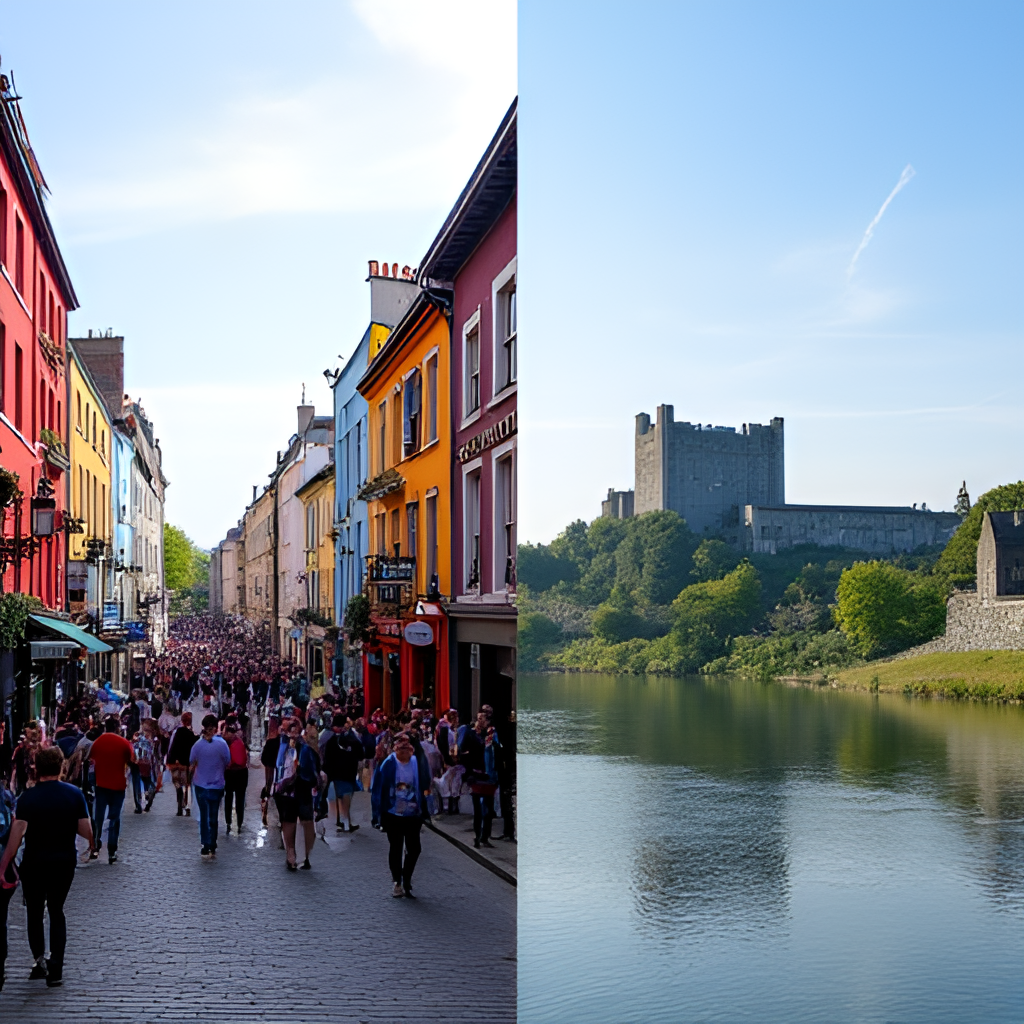
This image is a fictional image generated by GlobalTrendHub.
Exploring Limerick’s Arts and Heritage
Limerick has been making significant strides in its arts and culture scene. Beyond the main museums, you’ll find vibrant street art and smaller galleries showcasing local talent. The city is actively working to promote its cultural offerings, aiming to attract more visitors and residents who appreciate a rich heritage alongside a growing contemporary arts scene.
In my visits to Limerick, I’ve been genuinely impressed by the quality of the local theatre and music events. It feels like a city with a strong, authentic cultural pulse that’s perhaps less influenced by mass tourism than parts of Dublin. This makes exploring Limerick’s arts scene a rewarding experience, often uncovering hidden gems that you might miss in a larger capital.
Stepping Back in Time: A Look at History and Heritage
Both cities are steeped in history, offering fascinating glimpses into Ireland’s past. Dublin’s history is intrinsically linked to major national events, from Viking invasions to the Easter Rising. Sites like Dublin Castle, Kilmainham Gaol, and the General Post Office tell powerful stories of the nation’s journey.
Limerick, known as the ‘Treaty City,’ also boasts a long and complex history, dating back to Viking settlements in the 9th century. King John’s Castle is a magnificent medieval fortress that dominates the city’s skyline and is a must-visit for its interactive exhibitions and stunning views over the River Shannon. St. Mary’s Cathedral is another ancient landmark with centuries of stories within its walls.
Walking through Limerick’s Medieval Quarter and its elegant Georgian Quarter offers a tangible connection to its past. While Dublin’s historical sites are perhaps more nationally prominent, Limerick’s offer a concentrated look at a regional hub’s evolution, from a strategic fortress city to a modern urban centre.
Quality of Life: Finding Your Pace
This is an area where the comparison between limerick vs dublin gets really interesting, and often quite subjective. Dublin offers the fast pace of a major city, with endless opportunities for entertainment, career advancement, and international connections. However, this comes with the downsides of higher costs, congestion, and potentially longer commute times.
Many people who choose to live in Limerick highlight the better quality of life they experience there. The lower cost of living means less financial pressure. Commute times are significantly shorter for many residents compared to the national average, especially Dublin. This frees up time for family, hobbies, or simply relaxing.
Limerick is often described as a quieter city with less congestion. This isn’t to say it’s without its busy spots, but the general pace feels more relaxed. If you value easy access to amenities without the constant rush of a huge metropolis, Limerick could certainly be a strong contender. My own feeling is that while Dublin offers unparalleled excitement and opportunity, the ease of getting around and the lower cost of living in Limerick contribute significantly to a less stressful daily existence for many.
Limerick vs Dublin: The Commute Factor
Think about your daily grind. In Dublin, even a relatively short distance can turn into a lengthy commute due to traffic. Public transport is extensive but can be crowded. In Limerick, the city centre is quite compact, making it walkable. Even if you live in the suburbs, getting into the city or across town is generally much quicker.
This saved time is a huge plus for quality of life. It means more time for yourself, your family, or pursuing interests outside of work. For families, reduced commuting can also mean less stress around school runs and after-school activities.

This image is a fictional image generated by GlobalTrendHub.
Getting Around: Transport and Accessibility
Dublin has a more extensive public transport network, including buses, trams (Luas), and suburban rail (DART). For getting around the city centre and immediate suburbs without a car, Dublin offers more options. It also has the busiest international airport in Ireland, making international travel very convenient.
Limerick’s public transport is primarily bus-based within the city. While adequate for getting around the urban area, it’s not as comprehensive as Dublin’s. However, its compact size often makes walking or cycling preferable for shorter distances. Limerick is also well-connected by rail and bus to other major Irish towns and cities. Shannon Airport is conveniently located nearby, offering international flights, though not on the same scale as Dublin Airport.
For intercity travel, both cities are major hubs in the Irish transport network, with good road and rail links. However, if you’re planning frequent international travel, Dublin’s airport is a significant advantage.
Education and Job Opportunities
Dublin, as the capital and economic powerhouse, offers the broadest range of job opportunities across various sectors, particularly in tech, finance, and multinational corporations. It’s home to some of Ireland’s largest companies and has a very competitive job market.
Limerick also has a growing economy, with a focus on areas like technology, pharmaceuticals, and manufacturing. It’s home to the highly regarded University of Limerick (UL) and Limerick Institute of Technology (now part of TUS), contributing to a skilled local workforce. While the sheer volume of jobs in Dublin is higher, Limerick offers significant career prospects, often with less competition and potentially better salaries relative to the cost of living.
For students, both cities have reputable universities. University College Dublin (UCD) is a large, well-established institution. The University of Limerick is known for its strong engineering, science, and humanities programmes, and its campus is fantastic. The choice often comes down to specific courses, campus size, and the overall student experience sought.
Beyond the City Limits: Nature and Nearby Attractions
While both cities have parks and green spaces, their surrounding areas offer different types of natural beauty and outdoor activities. Dublin is bordered by the Dublin Mountains, offering hiking and cycling trails relatively close to the city. The coast is also easily accessible, with lovely seaside towns like Howth and Dalkey just a short train ride away.
Limerick is a gateway to the stunning Mid-West region and the Wild Atlantic Way. Within easy reach, you’ll find beautiful Lough Gur with its ancient sites, the picturesque village of Adare, and the fantastic Limerick Greenway, perfect for cycling and walking through the countryside. For dramatic coastal scenery, the Cliffs of Moher and the Burren in County Clare are a manageable drive away. If you’re a fan of exploring rugged landscapes and charming rural areas, Limerick’s location is a major plus.
Conclusion: Deciding Your Irish Home
So, when it comes to Limerick vs Dublin, which is “better”? The truth is, neither city is inherently superior; it entirely depends on what you’re looking for. If you crave the energy, diversity, and extensive opportunities of a major global capital, and the cost isn’t a primary barrier, Dublin is probably your answer. It’s a fantastic city with world-class attractions and a truly international feel.
However, if you prioritise affordability, a more relaxed pace of life, shorter commutes, and easy access to stunning natural landscapes, Limerick offers a compelling alternative. It’s a city with a strong identity, a growing cultural scene, and a friendly, community-focused atmosphere. Having spent time in both, I can see the appeal of each. Dublin buzzes with an almost electric energy, while Limerick feels like a place where you can breathe a little easier and connect more closely with the local community.
Ultimately, the choice between Limerick vs Dublin comes down to your personal circumstances, priorities, and what you value most in a place to live or visit. Both are brilliant Irish cities, each with its own unique character and plenty to offer.