Polish Presidential Election Results 2020: A Nation Divided
- Introduction: Understanding the Polish Presidential Election Results 2020
- The First Round: Setting the Stage
- Key Candidates and Their Platforms
- The Second Round: A Tight Race
- Andrzej Duda’s Narrow Victory
- Analyzing the Election Results
- Implications for Poland and the EU
- Reflecting on the Polish Presidential Election Results 2020
The Polish presidential election results 2020 were a pivotal moment for the nation, revealing deep political divisions and setting the course for its future. Like many, I watched the events unfold with great interest, seeing firsthand how a country can be pulled in different directions by competing visions. It felt like more than just an election; it was a reflection of Poland’s evolving identity on the world stage.
Poland’s presidential elections are held every five years, and the 2020 contest was particularly closely watched, both within Poland and across the European Union. The incumbent president, Andrzej Duda, sought re-election, facing a strong challenge from Rafał Trzaskowski, the Mayor of Warsaw. The lead-up to the election was marked by intense campaigning, public debate, and the unexpected challenges posed by the global COVID-19 pandemic, which even led to a postponement of the initial election date.
The First Round: Setting the Stage
The first round of the Polish presidential election took place on June 28, 2020. A crowded field of candidates vied for the top two spots, hoping to advance to a potential second round if no single candidate secured over 50% of the vote.
Andrzej Duda, backed by the ruling Law and Justice (PiS) party, emerged as the frontrunner in the first round, securing 43.50% of the votes. His campaign focused on traditional values, social welfare programs, and maintaining a strong national identity. Duda’s support base was particularly strong in rural areas and smaller towns, reflecting the PiS party’s broader appeal to conservative voters.
Rafał Trzaskowski, the candidate for the Civic Platform (PO) and the Civic Coalition, came in second with 30.46% of the vote. Trzaskowski, the liberal Mayor of Warsaw, entered the race relatively late, replacing the previous Civic Platform candidate. His platform emphasized restoring constitutional norms, improving relations with the European Union, and supporting liberal social policies. Trzaskowski garnered significant support in larger cities and among younger, more liberal voters.
Key Candidates and Their Platforms
While Duda and Trzaskowski were the main contenders, other candidates also played a role in the first round, representing a range of political viewpoints. Szymon Hołownia, an independent candidate, finished third, exceeding many initial expectations. His campaign appealed to voters looking for an alternative to the two main parties.
Other candidates included Władysław Kosiniak-Kamysz of the Polish People’s Party (PSL), Robert Biedroń of The Left, and Krzysztof Bosak of the Confederation. The diversity of candidates and their platforms highlighted the varied political landscape in Poland and the different priorities of the electorate.
The Second Round: A Tight Race
As neither Duda nor Trzaskowski secured an outright majority in the first round, a second round of voting was necessary. This runoff election was scheduled for July 12, 2020.
The second round campaign was highly polarized, with both candidates intensifying their efforts to win over undecided voters and supporters of the eliminated candidates. The debates between Duda and Trzaskowski were heated, covering key issues such as the future of Poland’s judiciary, its relationship with the EU, social policies, and LGBTQ+ rights. Trzaskowski criticized Duda’s record on democratic institutions and his alignment with the controversial policies of the PiS government. Duda, in turn, portrayed Trzaskowski as a representative of the liberal elite out of touch with the concerns of ordinary Poles.
The turnout in the second round was notably high, reaching 68.18%. This suggested a strong engagement from the electorate, underscoring the significance of the choice before them. Early exit polls on election night indicated a very close race, with some initially showing Trzaskowski slightly ahead, causing a stir and highlighting the uncertainty of the outcome.
This image is a fictional image generated by GlobalTrendHub.
Andrzej Duda’s Narrow Victory
The official results of the second round confirmed a remarkably close contest. Andrzej Duda was re-elected for a second term, receiving 51.03% of the vote. Rafał Trzaskowski secured 48.97% of the vote. The difference in votes was just over 400,000, making it the slimmest presidential election victory in Poland since the end of communism.
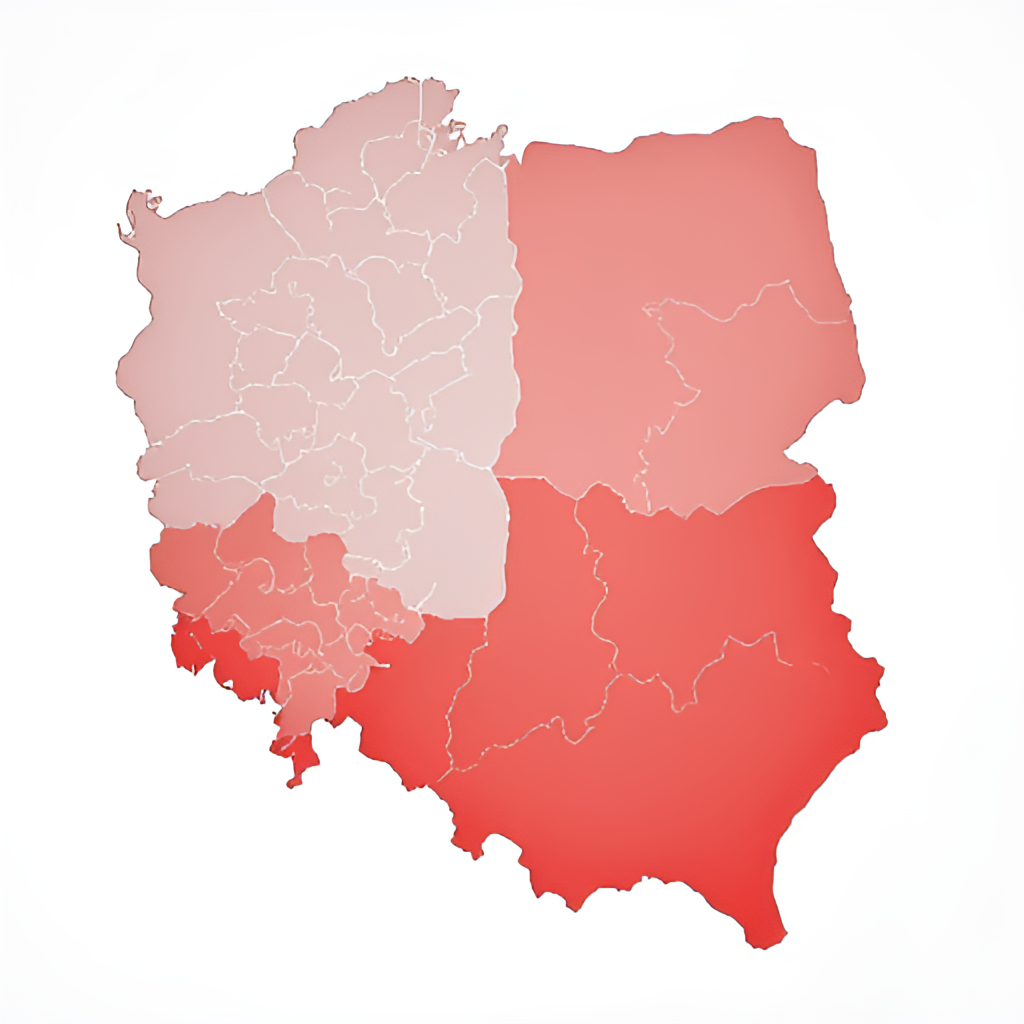
Duda’s victory was largely attributed to strong support in conservative strongholds, particularly in eastern and southern Poland. He also benefited from the mobilization of PiS voters and the endorsement of some of the candidates eliminated in the first round. Trzaskowski’s support was concentrated in urban areas and western Poland, but it wasn’t enough to overcome Duda’s lead nationwide. The Polish presidential election results 2020 clearly illustrated the geographical and ideological divides within the country.
Analyzing the Election Results
Several factors contributed to the outcome of the 2020 election. President Duda’s strong connection with the PiS government allowed him to leverage the party’s extensive organizational network and media influence. The government’s social spending programs, such as the 500+ child benefit, were popular and likely contributed to Duda’s support among families. Additionally, Duda’s campaign successfully mobilized conservative voters by focusing on cultural and social issues.
On the other hand, Rafał Trzaskowski’s late entry into the race presented a challenge, although he managed to quickly gain traction and unify a significant portion of the opposition vote. His focus on democratic values and improving EU relations resonated with many, particularly in urban centers. However, overcoming the incumbent’s advantages and the PiS party’s solid base proved to be a formidable task.
The high voter turnout also played a crucial role. Both sides managed to mobilize their supporters, indicating the high stakes of the election for many Poles. The results underscored the deep political polarization in Poland, a division often described as being between a more liberal, pro-European urban population and a more conservative, traditional rural population.

This image is a fictional image generated by GlobalTrendHub.
Implications for Poland and the EU
Andrzej Duda’s re-election had significant implications for Poland’s domestic and foreign policy. His continued presidency ensured the PiS government could continue to pursue its agenda, including controversial reforms to the judiciary that have been a source of tension with the European Union.
The election results also highlighted the ongoing debate about Poland’s place within the EU. While Trzaskowski advocated for closer ties with Brussels, Duda and the PiS government have often been at odds with EU institutions over issues of rule of law and democratic standards. The outcome suggested that a significant portion of the Polish electorate supported the direction set by the PiS party, even if it meant navigating a more challenging relationship with the EU.
For the European Union, the Polish presidential election results 2020 meant the continuation of a sometimes difficult dialogue with one of its largest member states. The close result also served as a reminder of the diverse political landscapes within the EU and the challenges in maintaining unity on core values.
Reflecting on the Polish Presidential Election Results 2020
Looking back at the Polish presidential election results 2020, it’s clear they represented a nation grappling with its identity and future direction. The incredibly tight outcome between Andrzej Duda and Rafał Trzaskowski underscored the significant divisions within Polish society. As someone who follows European politics, I saw this election as a microcosm of broader trends across the continent – the tension between traditional values and liberal reforms, and the debate over national sovereignty versus European integration. The Polish presidential election results 2020 will undoubtedly continue to shape the country’s trajectory and its relationship with its European partners for years to come. It was a stark reminder that in a democracy, every vote truly matters.
For more information on Polish politics, you might find resources from institutions like the Polish Cultural Institute London or news archives from reputable sources valuable. Understanding the historical and cultural context is key to fully appreciating the nuances of these election outcomes. You can also search for related topics like Poland political system or Polish parliamentary elections for a broader view.