Jaws the movie: A Cinematic Classic
- Jaws the movie: Diving into Cinematic History
- Behind the Screams: The Troubled Production of Jaws
- More Than Just Bait: The Enduring Appeal of Jaws’ Characters
- The Sound of Terror: John Williams’ Unforgettable Jaws Theme
- The Birth of the Blockbuster: How Jaws Changed Hollywood
- The “Jaws Effect”: Impact on Sharks and Society
- Why Jaws the movie Still Works Today
- Jaws the movie: Forever Lurking in Our Nightmares (and Our Hearts)
Jaws the movie is undeniably one of the most impactful and terrifying films ever made. When I first saw this classic shark film as a kid, I remember being genuinely scared to go in the ocean – a common experience for many viewers! This wasn’t just a movie; it was a cultural phenomenon that redefined summer entertainment and instilled a primal fear of the deep. Released in 1975, this thriller directed by Steven Spielberg, based on Peter Benchley’s novel, plunged audiences into a world where the seemingly safe shores of Amity Island became a hunting ground for a massive great white shark.
It’s funny how a film about a fish could have such a profound effect, isn’t it? But the film Jaws wasn’t just about a shark; it was about the fear of the unknown, the clash between man and nature, and the sometimes-fatal consequences of bureaucracy and greed. As someone who’s always been fascinated by both cinema and marine life, exploring the layers of Spielberg’s Jaws offers a truly rich experience. It’s a masterclass in suspense, character development, and making the most out of challenging circumstances.
Behind the Screams: The Troubled Production of Jaws
Creating a movie about a giant shark that attacks a small New England resort town sounds exciting, right? Well, the reality of filming Jaws was, shall we say, *a bit* more chaotic than expected. The production was famously difficult, primarily due to the decision to film on the open ocean off Martha’s Vineyard. This was one of the first major motion pictures to attempt such a feat, and it came with significant hurdles.
The mechanical shark, affectionately nicknamed “Bruce,” was a constant source of frustration. It frequently malfunctioned in the saltwater, leading to delays and budget overruns. David Brown, one of the producers, mentioned the budget ballooned from an estimated $3.5 million to around $9 million, largely due to issues with the mechanical effects. Disgruntled crew members even nicknamed the film “Flaws.” My experience tells me that sometimes the biggest creative breakthroughs come from needing to adapt, and that was certainly the case here.
Because the shark wasn’t reliably working, Spielberg was forced to be creative, often implying the shark’s presence rather than explicitly showing it. This necessity turned into one of the film’s greatest strengths, building incredible suspense through point-of-view shots, the iconic music, and clever editing. Think about the scene where the shark attacks Chrissie Watkins at the beginning – you barely see the shark, but the terror is palpable! This is a prime example of how limitations can breed innovation in filmmaking.
More Than Just Bait: The Enduring Appeal of Jaws’ Characters
While the shark is the undeniable antagonist, Jaws the movie wouldn’t resonate as deeply as it does without its fantastic human characters. Roy Scheider plays Police Chief Martin Brody, the “everyman” hero who is actually afraid of the water. He’s not a seasoned action star; he’s a New York transplant seeking a quieter life, thrust into an unimaginable nightmare. I think Brody’s relatability is key – we see ourselves in his fear and his determination to protect his town and family.
Then there’s Richard Dreyfuss as the enthusiastic, albeit sometimes arrogant, oceanographer Matt Hooper. Hooper represents the scientific expertise that the local authorities initially disregard. His dynamic with the grizzled, old-school shark hunter Quint, played with incredible intensity by Robert Shaw, provides much of the film’s dramatic tension and memorable dialogue.
The interactions between Brody, Hooper, and Quint on Quint’s boat, the Orca, are truly the heart of the film’s second half. Their contrasting personalities, their shared danger, and especially Quint’s haunting monologue about the USS Indianapolis disaster (a scene reportedly refined by multiple writers and Shaw himself ) create powerful moments of human connection amidst the chaos. These characters feel real; their fears, their strengths, and their flaws are what keep us invested beyond the scares.

This image is a fictional image generated by GlobalTrendHub.
The Sound of Terror: John Williams’ Unforgettable Jaws Theme
Da-dum. Da-dum. Just those two notes, and your heart rate quickens, doesn’t it? John Williams’ minimalist yet incredibly effective score for the film Jaws is a character in itself. It signals the shark’s presence, building tension and dread with each repetition and increase in tempo.
It’s hard to overstate the power of this theme. It’s instantly recognizable and has become synonymous with sharks and impending danger in popular culture. My own personal experience with the theme is that it can make even a calm day at the beach feel a little bit… edgy. That’s the sign of truly masterful film scoring. Williams won an Academy Award for his score, and it’s easy to see (or rather, hear!) why.
Beyond the main theme, Williams’ full score expertly underscores the film’s various moods, from the idyllic summer setting to the terrifying encounters at sea. The music doesn’t just accompany the action; it amplifies it, manipulating our emotions and ratcheting up the suspense to almost unbearable levels.
The Birth of the Blockbuster: How Jaws Changed Hollywood
Jaws wasn’t just a successful movie; it was a game-changer for the film industry. It’s widely credited as being the first summer blockbuster. Prior to Jaws, studios typically released their prestige films in the cooler months and used summer for lesser-quality movies aimed at a younger audience.
Universal took a different approach with Jaws. They invested heavily in marketing, including significant television advertising, and released the film widely in hundreds of theaters simultaneously – a strategy known as a “saturation release” that was relatively new at the time. This paid off immensely.
Jaws broke box office records, becoming the first film to gross over $100 million in the United States and the highest-grossing film of all time until *Star Wars* came out two years later. This unprecedented success proved that summer could be a prime season for major releases and established a model focused on high-concept, action-packed films with wide distribution and aggressive marketing campaigns. The face of Hollywood, arguably, changed forever after Jaws swam into theaters.
The economic impact was massive. The film, made on a budget that ended up around $9-12 million, pulled in hundreds of millions worldwide. Adjusted for inflation, its original run gross would be well over $1 billion today, placing it among the top-grossing films of all time. This commercial triumph solidified Spielberg’s career and influenced countless films and marketing strategies that followed.
The “Jaws Effect”: Impact on Sharks and Society
Beyond its cinematic and industrial impact, the film Jaws also had a significant, and unfortunately often negative, effect on public perception of sharks. The film’s portrayal of the great white as a relentless, vengeful man-eater fueled widespread fear and misconceptions about these creatures.
This phenomenon has been termed the “Jaws Effect.” It led to an increase in shark fishing tournaments and a general demonization of sharks, sometimes resulting in harmful conservation practices or lack thereof. As someone who appreciates the complexity of marine ecosystems, it’s a shame to see how a work of fiction, however thrilling, contributed to such misunderstandings about real animals.
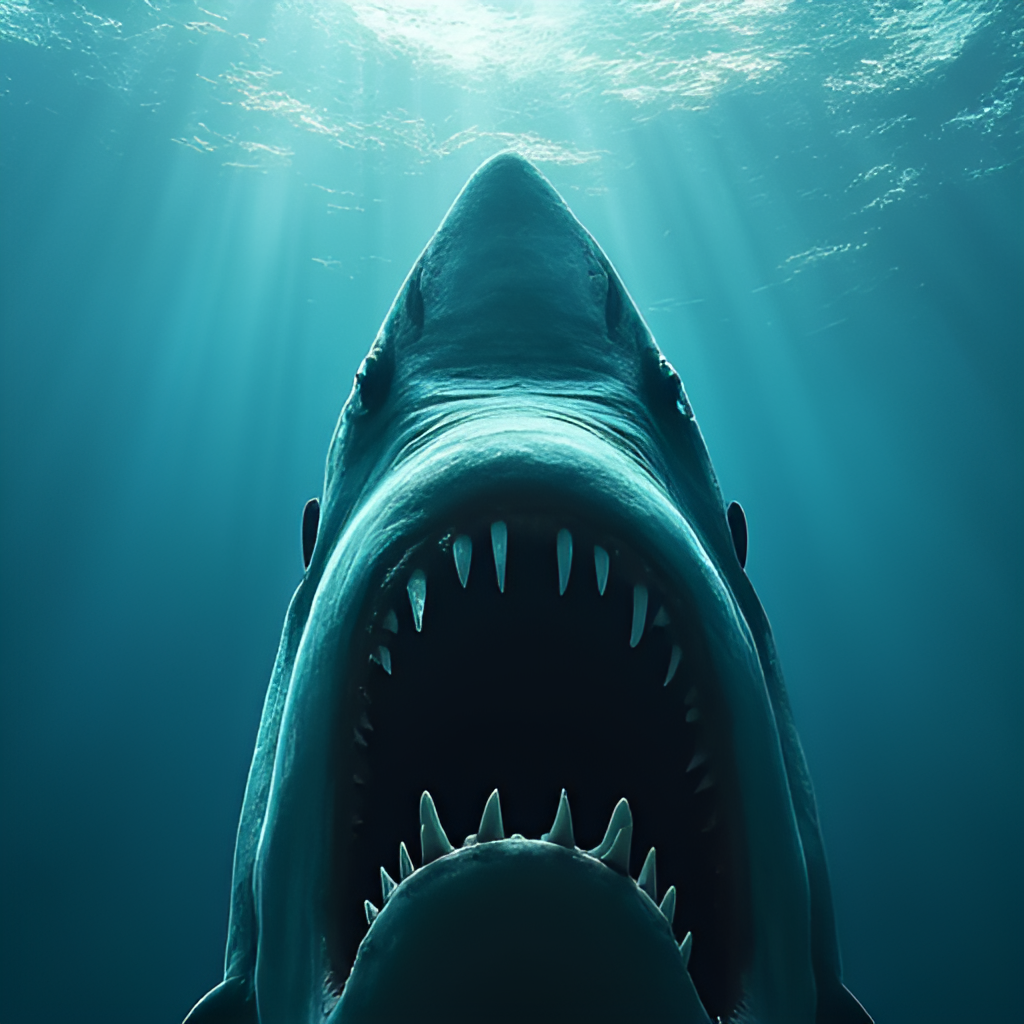
This image is a fictional image generated by GlobalTrendHub.
Even Peter Benchley, the author of the original novel, later became a shark conservationist and expressed regret for contributing to the negative image of sharks. He emphasized that real sharks do not target humans for sport or hold grudges. While the film’s primary goal was entertainment, its cultural resonance had unforeseen ecological consequences. It serves as a powerful reminder of the influence media can have on public perception and, subsequently, on the natural world.
Why Jaws the movie Still Works Today
Fifty years after its release, Jaws the movie continues to terrify and entertain audiences. Why? Because it’s a masterclass in classic filmmaking techniques. Spielberg’s direction, Bill Butler’s cinematography, and Verna Fields’ editing work together seamlessly to build suspense and create a visceral experience.
The film relies on suggestion and anticipation rather than constant gore, making the moments when the shark *is* revealed all the more impactful. The script is lean and effective, with memorable dialogue and well-defined character arcs. It’s a simple premise executed flawlessly. Whether you’re watching it for the first time or the tenth, the tension holds.
Furthermore, the core themes of facing the unknown, confronting fear, and the tension between public safety and economic interests remain relevant. The film’s depiction of Mayor Vaughn prioritizing tourist dollars over human lives feels particularly resonant even today. It reminds us that sometimes the most dangerous threats aren’t the monsters from the deep, but the human decisions driven by less-than-altruistic motives.
Jaws the movie: Forever Lurking in Our Nightmares (and Our Hearts)
In conclusion, Jaws the movie is much more than just a scary shark film. It’s a landmark achievement in cinema that changed the industry, spawned the blockbuster era, and remains a powerful example of how storytelling, character, and technical skill can combine to create something truly unforgettable. As someone who grew up watching this film and appreciating its impact, I can confidently say that Jaws the movie holds a unique and enduring place in film history, forever lurking in our collective consciousness whenever we look out at the vast, mysterious ocean.
While the film may have unfairly demonized sharks, it also sparked increased interest in these creatures and the marine environment. Its legacy is complex, a mix of thrilling entertainment, groundbreaking industry change, and a reminder of media’s power. For anyone who loves movies, or perhaps even fears the water just a little bit, Jaws the movie is essential viewing.